Victoria Ford, LMFT, SEP
Meet Victoria
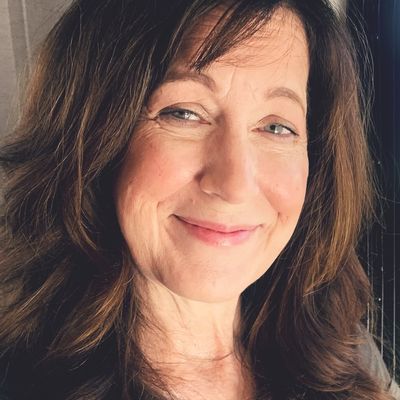
Hello, I'm Victoria.
I'm a licensed mental health therapist in Missouri & Kansas with more than 25 years of experience helping women heal from trauma, navigate life's transitions, and reconnect with themselves.
But after all these years, I don't believe good therapy is simply about knowing more techniques.
It's about knowing when to use them, when to slow down, when to get curious—and when to simply be present with another human being.
My clinical roots are in Marriage and Family Therapy, family systems, generational patterns, and trauma healing.
Over the years, my work has deepened through EMDR, Somatic Experiencing®, attachment-based therapy, stress physiology, mindfulness, and holistic approaches.
Although I no longer provide couples or family therapy, decades of working from a family-systems perspective shape how I understand the relationships women bring into therapy—their marriages, parents, adult children, family histories, and the patterns that can travel quietly through generations.
I don't see you as a collection of symptoms.
Your body, mind, heart, relationships, history, and spirit are interconnected—and all of you is welcome here.
What It's Like to Work With Me
I'm not a therapist who sits quietly, nods, and waits for you to figure everything out on your own.
I'm warm and collaborative, but I'm also active in our work together.
I'll ask questions. I'll notice patterns. I'll offer another perspective when I see one. I'll teach you practical ways of working with your nervous system, and I'll help you experiment with resources you can use outside our sessions.
Sometimes we'll talk.
Sometimes we'll slow down and listen to what your body is communicating.
Sometimes we'll use EMDR, imagery, movement, mindfulness, creativity, or other approaches that help us get somewhere words alone haven't been able to reach.
And sometimes what you need most is simply enough space to hear yourself differently.
I believe good therapy should help expand your possibilities—not make your world smaller.
I Don't Rush the Work - and also I don't dilly-dally
One thing I've learned over the years is that healing doesn't respond particularly well to being hurried.
I don't fill every hour of my day with appointments. That's intentional.
I want to have the presence and energy to be genuinely with you when we're together—not watching the clock while mentally preparing for the next person.
I value presence over productivity.
That philosophy also shapes how I approach trauma therapy.
I'm interested in meaningful change, but not in forcing your nervous system to move faster than it's ready to move.
We'll pay attention to what needs time, what needs support, and what may finally be ready to change.
Experience Has Also Taught Me What I Don't Know
After more than 25 years as a therapist, I'm comfortable saying that I don't know everything—and I don't need to.
There are areas outside my expertise and times when another clinician may be a better fit for what someone needs. When I recognize that, I'll be honest with you.
I've built relationships with skilled professionals whose work I respect, and when another kind of expertise would serve you better, I value being able to help you consider those options.
Knowing when I'm the right therapist—and when I'm not—is part of how I practice ethically.
A Little About Me
Like many of the women I work with, I've lived through my own seasons of change, loss, healing, reinvention, and beginning again.
I'm now in a stage of life where I appreciate more deeply that growing older doesn't have to mean becoming smaller.
It can mean becoming clearer about what matters.
Letting go of what doesn't.
Trusting yourself more.
And becoming increasingly willing to build a life that actually feels like your own.
Outside the therapy room, I'm drawn to quiet places, nature, camping, and travel.
I love the kinds of experiences that create enough space to notice what's happening inside—the small moments of beauty, connection, curiosity, and aliveness that can easily disappear when life gets too full.
Those things aren't separate from how I practice therapy.
They've helped shape what I believe about healing: we need resources, relationships, meaning, curiosity, and experiences that remind us there is more to life than surviving what has happened to us.
My Practice
I offer somatic psychotherapy for women in Missouri and Kansas; partly virtual and partly in person.
I work by the seasons; some seasons I am fully virtual and I will share details about that with you at our first meeting (consultation or assessment).
Many of my clients meet with me every other week, although we'll determine a rhythm based on your needs and the work we're doing together.
At times, established clients may choose longer EMDR Intensive sessions when having more time and spaciousness would support a particular piece of our work.
Some women work with me through a particular season of life.
Others return over the years when something new asks for their attention.
There isn't one right way to do therapy.
If you're looking for a therapist who brings experience, curiosity, creativity, presence, and a whole-person approach to healing, I encourage you to reach out!
Expert Professional Services for Somatic Experiencing
Why did you become a therapist?

My Grandmother
There's one person I want you to know about because, in many ways, her presence still quietly shapes the therapist—and the person—I am today.
My grandmother showed me what love was, in a way I could feel it and receive it, and begin to believe something good about myself.
I grew up in a difficult environment, and there were things happening in my childhood that she couldn't change.
But she gave me something
I have come to understand was extraordinarily powerful.
She delighted in my presence, showing me unconditional love!
I can still see her face looking at mine with such unconditional love and pure joy that I just existed! - Huge smile, sparkling eyes.
She didn't need me to be different. She didn't need me to do anything.
In her presence, I simply mattered.
And she was present with me when I was around.
A few precious times, I got to spend the night at her house in a little village near the Kaw River.
I can still hear the train moving through, and the creak of the old stairs as we climbed to her bedroom.
And I remember her voice in the dark.
Steady and reassuring, teaching me the Lord's Prayer.
She never said, "I'm teaching you this because someday you might need something to hold onto when you're afraid."
She simply taught it to me.
And then I had it.
A prayer I could carry home with me. Words I could reach for when she wasn't there.
My grandmother was deeply spiritual.
Prayers and readings surrounded her, and I have some of them with me now.
She also used to say that we could each go out and "brighten someone's corner of the world." That it would make a difference that wasn't small.
I think she brightened mine more than she ever knew.
Today, a photograph of her sits where I can see it while I provide therapy.
Sometimes I look at that face that once looked at me with such love, and I'm reminded of something I've known in my body since long before I had professional language for it:
We cannot always change what another person has lived through.
But being deeply seen, valued, and accompanied can become part of what helps them survive—and eventually discover that their story
can hold more than what happened to them.
Her love didn't erase my trauma.
It gave me another experience to carry alongside it.
And perhaps that's one reason I believe so deeply in helping people discover and strengthen the resources that already exist within and around them—the relationships, beliefs, memories, places, practices, and experiences that remind us who we are beyond what we've survived.
My grandmother showed me love and pointed me in the direction of helping others.
She's always with me and still guides my path!